Surgery for Cervical Slip Disc, Cervical Radiculopathy & Cervical Myelopathy
What Is This Surgery?
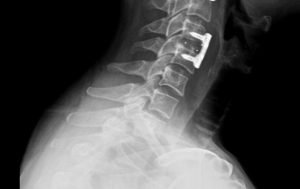
Anterior Cervical Discectomy & Fusion (ACDF) is one of the most commonly performed spine surgeries for patients suffering from a slipped disc in the neck (cervical disc herniation), cervical nerve compression or spinal cord compression (cervical myelopathy).
The surgery is performed through a small incision at the front of the neck, allowing the surgeon to safely reach the affected cervical disc without disturbing the muscles at the back of the neck.
The goals of the surgery are to:
Remove the damaged cervical disc causing nerve or spinal cord compression.
Relieve pressure on the spinal cord and nerve roots.
Reduce neck pain, arm pain, numbness and weakness.
Restore the normal height and alignment of the cervical spine.
Stabilize the operated spinal segment using an interbody cage with or without a cervical plate and screws.
Promote fusion between the affected vertebrae for long-term stability.
ACDF is considered a minimally invasive open cervical spine procedure, performed using microsurgical techniques and specialised instruments through a small cosmetic incision. Worldwide, it is regarded as the gold-standard operation for appropriately selected patients with cervical disc disease and cervical myelopathy.
Why Is This Surgery Performed?
This surgery may be recommended for:
Cervical Slip Disc (Cervical Disc Herniation)
Cervical Radiculopathy (Pinched Cervical Nerve)
Cervical Myelopathy (Spinal Cord Compression)
Cervical Canal Stenosis
Cervical Foraminal Stenosis
Degenerative Cervical Disc Disease
Bone Spurs (Cervical Osteophytes) causing nerve compression
✓ Symptoms persist despite medications and physiotherapy.
✓ Neck pain is associated with significant arm pain or neurological symptoms.
✓ MRI confirms cervical nerve root or spinal cord compression.
✓ Progressive weakness develops in the arm or hand.
✓ Cervical myelopathy is diagnosed.
✓ Difficulty walking or hand clumsiness is worsening.
✓ Quality of life is significantly affected.
✓ Symptoms interfere with work, sleep or daily activities.
How Is The Surgery Performed?
Step 1
The procedure is performed under general anesthesia. The patient lies comfortably on the operating table with the neck positioned appropriately.
Step 2
A small horizontal skin incision (approximately 3–5 cm) is made along a natural skin crease on the front of the neck for an excellent cosmetic outcome.
Step 3
The muscles, windpipe (trachea), food pipe (oesophagus) and major blood vessels are gently separated—not cut—to safely reach the cervical spine. The affected disc is identified using specialised instruments and magnification.
Step 4
The damaged disc is completely removed. Bone spurs and thickened ligaments compressing the spinal cord or nerves are carefully removed to achieve complete decompression. A specialised cage filled with bone graft or bone substitute is inserted into the disc space, and in many patients, a cervical plate with screws is used to provide additional stability and promote successful fusion.
Step 5
After confirming satisfactory decompression and implant positioning, the wound is closed with cosmetic sutures. Most ACDF procedures are completed within 1–2 hours, depending on the number of spinal levels treated.
What Are The Advantages?
Potential benefits include:
Small cosmetically placed incision
Minimal muscle damage
Excellent decompression of nerves and spinal cord
Relief of arm pain and numbness
Improvement in hand function
Better walking balance in patients with myelopathy
Restoration of normal cervical alignment
Stable spinal fusion
Less postoperative pain
Shorter hospital stay
Early mobilisation
Faster return to normal activities
Excellent long-term outcomes for appropriately selected patients
What Are The Risks?
Every surgical procedure carries certain theoretical risks and potential complications. However, every effort is made to minimise these risks through meticulous surgical planning, advanced technology and comprehensive patient optimisation.
At Bombay Spine Clinic™, ACDF is performed using modern microsurgical techniques, high-quality implants and specialised instruments that allow precise decompression of the spinal cord and nerves while minimising tissue injury.
Every patient also undergoes detailed pre-operative evaluation and optimisation with physicians, cardiologists, anaesthetists and other specialists whenever required, ensuring maximum safety and smoother recovery.
Potential risks discussed with patients include:
Infection
Bleeding
Temporary swallowing discomfort
Temporary voice hoarseness
Dural tear (rare)
Nerve injury
Persistent symptoms
Failure of fusion (non-union)
Implant-related complications
Adjacent segment degeneration
Rare need for revision surgery
Fortunately, significant complications are uncommon when surgery is performed for appropriate indications using modern surgical techniques.
Preparing For Surgery
Before surgery:
Clinical evaluation
MRI and X-ray review
CT scan (when required)
Blood investigations
Medical fitness assessment
Medication review
Anaesthesia assessment
Patients should inform their doctor regarding:
Blood thinning medications
Diabetes
Heart disease
Previous neck surgeries
Allergies
Smoking history
Smoking cessation is strongly recommended as it improves bone healing and fusion.
What Happens During Hospital Stay?
Day of Surgery
Hospital admission
Surgery
Recovery room observation
Pain management
Early neurological assessment
First 24 Hours
Assisted walking
Liquid to soft diet as tolerated
Physiotherapy guidance
Wound care instructions
Discharge
Most patients are discharged within:
24–48 hours
depending on recovery and the number of levels operated.
Recovery After Surgery
Week 1
Expected symptoms:
Mild neck discomfort
Temporary swallowing difficulty in some patients
Walking encouraged
Light daily activities permitted
Weeks 2–6
Gradual increase in activity
Follow-up consultation
Physiotherapy if advised
Improvement in arm pain and neurological symptoms
6 Weeks–3 Months
Progressive strengthening exercises
Return to routine daily activities
Continued bone fusion
Long-Term Recovery
Most patients experience excellent relief of arm pain and improvement in neurological function. Maintaining good posture, neck exercises and a healthy lifestyle helps optimise long-term outcomes.
When Can I Return To Work?
Occupation
Approximate Timeline
Desk Job
2–4 weeks
Light Work
4–6 weeks
Manual Labour
8–12 weeks
Driving
3–4 weeks (after medical clearance)
Sports
10–12 weeks
Frequently Asked Questions
1. Why do I need this surgery?
Because a damaged cervical disc or bone spur is compressing your spinal cord or nerve, causing persistent pain, weakness or neurological symptoms.
2. Are there alternatives to surgery?
Yes. Many patients improve with medications, physiotherapy and activity modification. Surgery is recommended when conservative treatment fails or neurological deficits develop.
3. Will I have a large scar?
No. The incision is usually 3–5 cm and is placed within a natural skin crease for a good cosmetic appearance.
4. How long will I stay in hospital?
Most patients stay in hospital for 24–48 hours.
5. When can I start walking?
Walking usually begins within a few hours after surgery under supervision.
6. When can I climb stairs?
Most patients can safely climb stairs with support before discharge.
7. When can I drive?
Driving is usually permitted after approximately 3–4 weeks, once neck movements are comfortable and you are no longer taking strong pain medication.
8. When can I return to work?
Most office workers return within 2–4 weeks, while physically demanding jobs may require 8–12 weeks.
9. What is the success rate?
ACDF has an excellent success rate for relieving arm pain caused by nerve compression. Most patients also experience improvement in numbness, weakness and walking balance when surgery is performed at the appropriate time.
10. Can the problem recur?
The operated level is fused and usually does not recur. However, age-related changes may gradually develop at adjacent spinal levels over many years.
Myth vs Fact
Myth:
Neck surgery is extremely dangerous and always leads to paralysis.
Fact:
Modern ACDF is a well-established and safe procedure when performed by trained spine surgeons for appropriate indications using modern microsurgical techniques.
Myth:
Every patient with a slipped cervical disc requires surgery.
Fact:
Most cervical disc problems improve without surgery. Surgery is recommended only when symptoms persist despite adequate conservative treatment or when significant nerve or spinal cord compression is present.
If you have been advised cervical spine surgery or would like a second opinion regarding your MRI findings, you may schedule a consultation or upload your MRI for specialist review.
Dr. Siddharth KatkadeConsultant Spine Surgeon
Bombay Spine Clinic™
Top of Form
Bottom of Form
Need Clinical Evaluation?
Consult with Dr. Siddharth Katkade (MBBS, MS, DNB, FASSI Germany/UK) for accurate diagnosis and personalized spine treatment.