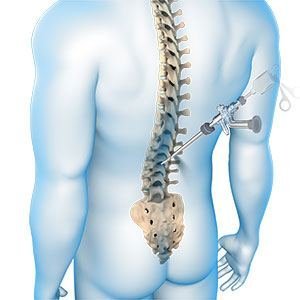
Ultra-Minimally Invasive Endoscopic Fusion Surgery for Lumbar Instability, Slip Disc & Spondylolisthesis
What Is This Surgery?
Endoscopic Lumbar Interbody Fusion using the Unilateral Biportal Endoscopic (UBE) technique is one of the latest advances in minimally invasive spine surgery. It combines the benefits of endoscopic decompression with spinal stabilization and fusion, allowing treatment of conditions where simple nerve decompression alone is not sufficient.
Unlike conventional open fusion surgery, UBE Endoscopic Fusion is performed through small keyhole incisions using a high-definition endoscopic camera and specialised surgical instruments. The compressed nerves are first decompressed, following which the damaged intervertebral disc is removed and replaced with a specialised interbody cage filled with bone graft to achieve spinal fusion.
The goals of the surgery are to:
Relieve pressure on the spinal nerves
Remove the damaged disc
Restore disc height
Stabilize the spinal segment
Correct spinal alignment
Relieve back pain and leg pain
Achieve long-term spinal fusion
Enable early mobilisation with minimal muscle damage
UBE Endoscopic Fusion is considered an ultra-minimally invasive fusion surgery, offering the advantages of endoscopic visualization together with stable spinal fixation through small incisions.
Why Is This Surgery Performed?
This surgery may be recommended for:
Lumbar Spondylolisthesis
Lumbar Canal Stenosis with Instability
Recurrent Lumbar Disc Herniation
Degenerative Disc Disease with Mechanical Back Pain
Foraminal Stenosis
Segmental Lumbar Instability
Revision Lumbar Surgery
Degenerative Lumbar Scoliosis (selected cases)
Common symptoms that may lead to surgery include:
Persistent low back pain
Sciatica (pain radiating into the leg)
Tingling or numbness
Weakness in the leg
Difficulty walking
Back pain worsened by standing or walking
Mechanical instability-related pain
Symptoms not improving despite conservative treatment
Unlike decompression surgery alone, fusion is recommended when the affected spinal segment is unstable or expected to become unstable after decompression.
Who Is A Suitable Candidate?
You may be a suitable candidate if:
✓ Symptoms persist despite medications and physiotherapy.
✓ Significant back pain is associated with leg pain.
✓ MRI confirms nerve compression.
✓ X-rays demonstrate spinal instability or spondylolisthesis.
✓ Progressive neurological weakness develops.
✓ Previous non-surgical treatment has failed.
✓ Quality of life is significantly affected.
✓ Fusion is required to restore spinal stability.
How Is The Surgery Performed?
Step 1
The procedure is performed under general anesthesia. The patient is positioned comfortably on a specialised spine operating table.
Step 2
Small skin incisions are made over the affected spinal level. A high-definition endoscopic camera is introduced through one portal while specialised surgical instruments are introduced through another portal.
Step 3
Using continuous saline irrigation and endoscopic magnification, the compressed nerves are carefully decompressed by removing thickened ligaments, bone spurs and damaged disc material.
Step 4
The diseased intervertebral disc is removed, and the disc space is prepared. A specialised fusion cage filled with bone graft or bone substitute is inserted into the disc space to restore disc height and promote fusion. Percutaneous pedicle screws and rods are then inserted through small skin incisions to stabilise the spine.
Step 5
After confirming satisfactory nerve decompression, implant position and spinal alignment, the small skin incisions are closed using cosmetic sutures.
Most UBE Endoscopic Fusion procedures are completed within 2–4 hours, depending on the complexity and number of levels treated.
What Are The Advantages?
Potential benefits include:
Small cosmetic incisions
Minimal muscle damage
Excellent endoscopic magnification
Reduced blood loss
Less postoperative pain
Stable spinal fixation
Restoration of disc height
Preservation of surrounding muscles
Faster mobilisation
Shorter hospital stay
Earlier return to normal activities
Improved spinal alignment
High fusion success rates
Significant improvement in back pain and sciatica
Better long-term quality of life
Compared with conventional open fusion surgery, UBE Endoscopic Fusion offers effective decompression and stabilisation while minimising tissue injury and facilitating faster recovery in appropriately selected patients.
What Are The Risks?
Every surgical procedure carries certain theoretical risks and potential complications. However, every effort is made to minimise these risks through meticulous surgical planning, advanced technology and comprehensive patient optimisation.
At Bombay Spine Clinic™, UBE Endoscopic Fusion is performed using a high-definition biportal endoscopic system, specialised endoscopic fusion instruments, modern pedicle screw systems and advanced imaging guidance. These technologies allow precise decompression, accurate implant placement and optimal spinal stabilisation while minimising disruption to surrounding muscles and soft tissues.
Every patient undergoes a comprehensive pre-operative assessment. Depending on individual health requirements, optimisation may involve physicians, cardiologists, anaesthetists and other specialists. This multidisciplinary approach enhances surgical safety, facilitates recovery and improves long-term outcomes.
Potential risks discussed with patients include:
Infection
Bleeding
Dural tear (CSF leak)
Nerve injury
Implant-related complications
Cage migration
Screw loosening or breakage
Failure of fusion (non-union)
Persistent pain
Adjacent segment degeneration
Rare need for revision surgery
Fortunately, careful patient selection, modern endoscopic techniques and comprehensive perioperative care help minimise these risks.
Preparing For Surgery
Before surgery:
Clinical evaluation
MRI review
Standing dynamic X-rays
CT scan (if required)
Blood investigations
Medical fitness assessment
Medication review
Anaesthesia assessment
Patients should inform their doctor regarding:
Blood thinning medications
Osteoporosis
Diabetes
Heart disease
Previous spinal surgeries
Allergies
Smoking history
Smoking cessation is strongly recommended as it improves bone healing and fusion rates.
What Happens During Hospital Stay?
Day of Surgery
Hospital admission
Surgery
Recovery room observation
Pain management
Neurological monitoring
First 24–48 Hours
Assisted walking
Physiotherapy guidance
Stair climbing as tolerated
Wound care instructions
Discharge
Most patients are discharged within:
2–3 days
depending on the complexity of surgery and individual recovery.
Recovery After Surgery
Week 1
Expected symptoms:
Mild wound discomfort
Improvement in leg pain
Gradual reduction in back pain
Walking encouraged several times a day
Weeks 2–6
Progressive walking programme
Return to light daily activities
Follow-up consultation
Physiotherapy if advised
6 Weeks–3 Months
Core strengthening exercises
Progressive functional rehabilitation
Continued fusion healing
Return to routine activities
Long-Term Recovery
Fusion continues over several months. Most patients experience substantial improvement in back pain, sciatica, walking ability and overall quality of life. Maintaining good posture, spinal fitness, bone health and adherence to rehabilitation protocols contributes to long-term success.
When Can I Return To Work?
Occupation
Approximate Timeline
Work From Home
2–3 weeks
Desk Job
4–6 weeks
Light Physical Work
6–8 weeks
Heavy Manual Labour
3–4 months
Driving
3–4 weeks
Sports & High-Impact Activities
3–6 months
Frequently Asked Questions
1. Why do I need this surgery?
Because your spinal condition requires both nerve decompression and spinal stabilisation. Fusion helps relieve pain while preventing abnormal movement at the affected spinal level.
2. Are there alternatives to surgery?
Many patients improve with medications, physiotherapy, lifestyle modification and image-guided injections. Surgery is recommended when these measures fail or when spinal instability is present.
3. Will I have a large scar?
No. UBE Endoscopic Fusion is performed through several small keyhole incisions, resulting in excellent cosmetic healing.
4. How long will I stay in hospital?
Most patients remain in hospital for approximately 2–3 days.
5. When can I start walking?
Walking usually begins within a few hours after surgery under supervision.
6. When can I climb stairs?
Most patients can safely climb stairs before discharge.
7. When can I drive?
Driving is generally permitted after approximately 3–4 weeks, once you are comfortable and no longer require strong pain medications.
8. When can I return to work?
Work-from-home activities are often possible after 2–3 weeks. Office-based work generally resumes within 4–6 weeks, while physically demanding occupations may require 3–4 months.
9. What is the success rate?
When performed for appropriate indications, UBE Endoscopic Fusion has a high success rate in relieving back pain, sciatica and improving spinal stability. Most patients experience significant improvement in function and quality of life.
10. Will the implants remain permanently?
Yes. The pedicle screws, rods and fusion cage are designed to remain permanently and usually do not require removal unless a specific complication develops.
Myth vs Fact
Myth:
Fusion surgery means I will not be able to bend or live a normal life.
Fact:
Only the affected spinal segment is fused. Most patients regain excellent mobility for daily activities and return to an active lifestyle after rehabilitation.
Myth:
Endoscopic fusion is less stable than open fusion.
Fact:
When performed correctly using modern implants and appropriate patient selection, UBE Endoscopic Fusion provides stable fixation and excellent fusion outcomes comparable to conventional fusion surgery.
When Should I Contact My Surgeon After Surgery?
Contact your surgeon if you experience:
Fever
Increasing wound discharge
Progressive weakness
Severe back or leg pain
Difficulty passing urine
New numbness
Significant wound swelling
Sudden worsening of symptoms
Related Conditions
Lumbar Spondylolisthesis
Lumbar Canal Stenosis
Recurrent Slip Disc
Degenerative Disc Disease
Lumbar Instability
Related Procedures
Endoscopic Decompression (UBE)
MIS TLIF (Tubular)
Microscopic Discectomy (Tubular)
Image-Guided Spinal Injections
Need Expert Advice?
If you have been advised lumbar fusion surgery or would like a second opinion regarding your MRI, X-rays or CT scan, you may schedule a consultation or upload your imaging studies for specialist review.
Dr. Siddharth KatkadeConsultant Spine Surgeon
Bombay Spine Clinic™
Top of Form
Bottom of Form
Need Clinical Evaluation?
Consult with Dr. Siddharth Katkade (MBBS, MS, DNB, FASSI Germany/UK) for accurate diagnosis and personalized spine treatment.