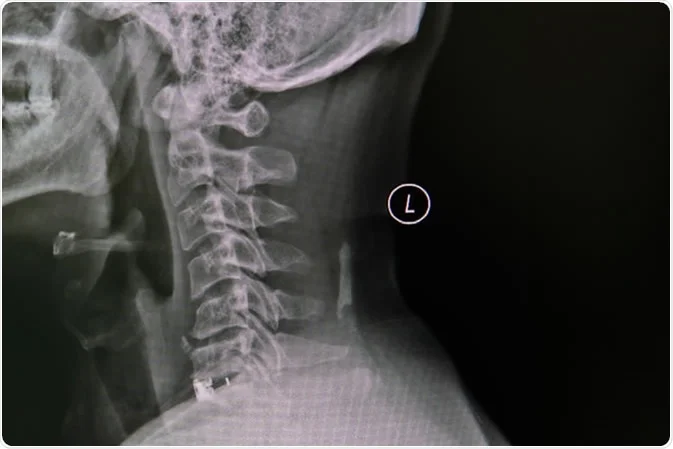
Cervical Spondylosis refers to age-related wear and tear of the cervical spine (neck). Over time, the intervertebral discs lose water content and elasticity, while the joints, ligaments and bones of the neck undergo degenerative changes. These changes may lead to neck pain, stiffness, nerve compression or, in advanced cases, spinal cord compression.
Cervical spondylosis is a common condition and becomes increasingly prevalent with age. While many individuals may have degenerative changes on MRI or X-rays, not everyone develops symptoms.
Common Symptoms
Patients may experience:
Neck pain or stiffness
Pain around the shoulders and upper back
Headaches originating from the neck
Reduced neck movements
Pain radiating into the arm
Tingling or numbness in the arm or hand
Weakness in the upper limbs
Difficulty with prolonged computer or desk work
In advanced cases involving spinal cord compression:
Hand clumsiness
Difficulty buttoning clothes
Frequent dropping of objects
Gait imbalance
Difficulty walking
Causes & Risk Factors
Cervical spondylosis develops due to gradual degeneration of spinal structures.
Common risk factors include:
Increasing age
Repetitive neck movements
Long-term desk work
Poor posture
Prolonged mobile phone use
Previous neck injuries
Smoking
Sedentary lifestyle
Genetic predisposition
When Should You Seek Medical Advice?
Medical evaluation is recommended if:
Neck pain persists despite treatment
Symptoms recur frequently
Pain radiates into the arm
Tingling or numbness develops
Weakness develops in the arm or hand
Balance problems occur
Hand coordination becomes affected
Walking becomes difficult
Symptoms interfere with work, sleep or daily activities
Early assessment is particularly important if symptoms suggest spinal cord involvement.
How Is It Diagnosed?
Clinical Examination
A detailed neurological examination helps identify nerve or spinal cord involvement.
X-Ray
Can demonstrate age-related degeneration, disc space narrowing and alignment abnormalities.
MRI
MRI is the most useful investigation for evaluating:
Disc degeneration
Disc prolapse
Nerve compression
Spinal cord compression
Canal stenosis
CT Scan
May be useful for detailed evaluation of bony structures.
Blood Tests
Usually not required unless infection, inflammatory disease or other medical conditions are suspected.
Treatment Options
Non-Surgical Treatment
Most patients improve without surgery.
Treatment may include:
Activity modification
Posture correction
Physiotherapy
Ergonomic workplace adjustments
Neck strengthening exercises
Medications
Lifestyle modifications
The goal is to reduce pain, improve function and prevent progression of symptoms.
Surgical Treatment
Surgery may be considered when:
Significant nerve compression is present
Progressive weakness develops
Symptoms fail to improve with conservative treatment
Spinal cord compression (Cervical Myelopathy) is present
Depending on the underlying pathology, surgical options may include:
Cervical Decompression Surgery
Cervical Discectomy
Cervical Fusion Surgery
Disc Replacement Surgery
The choice of procedure depends on the patient’s condition and imaging findings.
Frequently Asked Questions
1. Is cervical spondylosis a normal part of ageing?
Yes. Degenerative changes are common with ageing, although not everyone develops symptoms.
2. Can cervical spondylosis be cured completely?
The degenerative changes themselves cannot be reversed, but symptoms can often be managed effectively.
3. Does every patient with cervical spondylosis need surgery?
No. Most patients improve with non-surgical treatment.
4. Can cervical spondylosis cause arm pain?
Yes. Compression of cervical nerves may cause pain, tingling or numbness radiating into the arm.
5. What is cervical myelopathy?
It refers to compression of the spinal cord in the neck and may cause hand clumsiness, balance problems and difficulty walking.
6. Is physiotherapy beneficial?
Yes. Physiotherapy plays an important role in improving posture, mobility and muscle strength.
7. Can poor posture worsen symptoms?
Yes. Poor posture and prolonged forward neck positioning can aggravate symptoms.
8. When should I worry about cervical spondylosis?
Symptoms such as weakness, loss of hand dexterity, gait imbalance or worsening neurological deficits require prompt evaluation.
9. Can I continue working with cervical spondylosis?
Most patients can continue working with appropriate treatment, posture correction and ergonomic modifications.
10. Is MRI always necessary?
Not always. MRI is generally recommended when symptoms persist, neurological symptoms develop or surgery is being considered.
Related Conditions
Neck Sprain / Cervical Strain
Trapezitis
Slip Disc (Cervical Disc Herniation)
Cervical Myelopathy
Peripheral Neuropathy
Lumbar Canal Stenosis
When Should You Consult a Spine Specialist?
If your neck pain is persistent, associated with arm symptoms, weakness, hand clumsiness, balance problems or progressive neurological symptoms, a consultation with a spine specialist can help establish an accurate diagnosis and determine the most appropriate treatment plan.
Need Expert Advice?
Book a consultation with Dr. Siddharth Katkade or upload your MRI/report for review through our Patient Resource Centre.
Need Clinical Evaluation?
Consult with Dr. Siddharth Katkade (MBBS, MS, DNB, FASSI Germany/UK) for accurate diagnosis and personalized spine treatment.