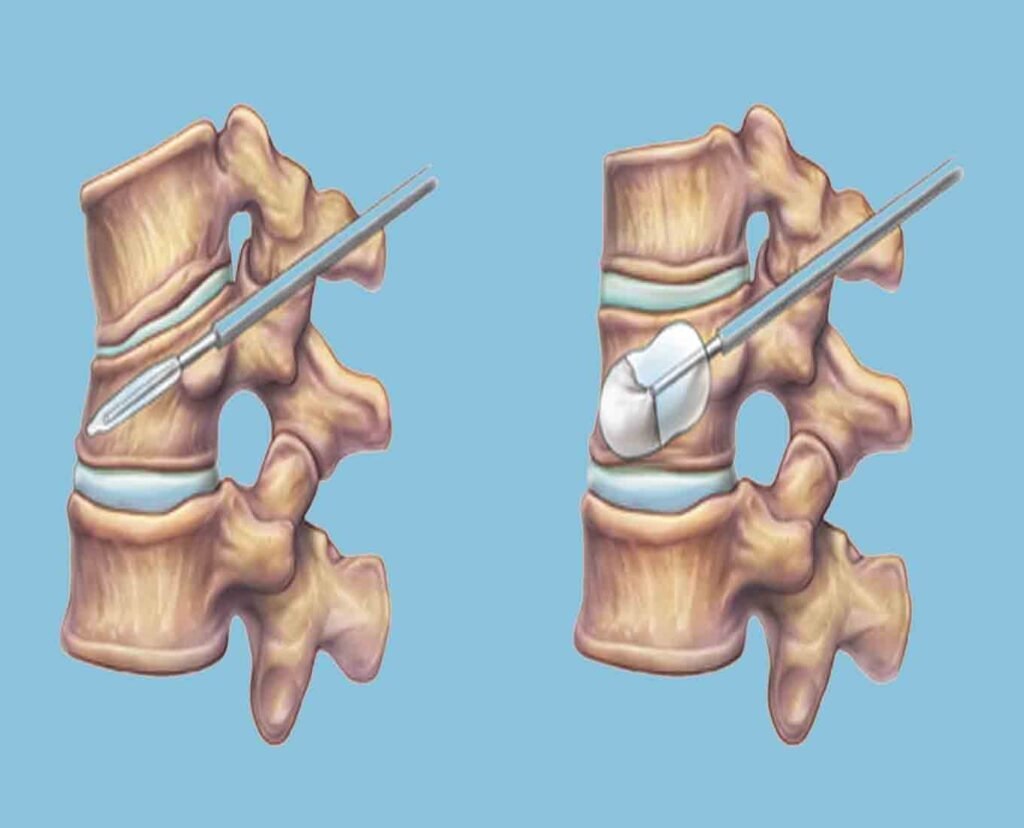
Minimally Invasive Surgery for Osteoporotic and Compression Fractures
What Is This Surgery?
Vertebroplasty and Kyphoplasty are minimally invasive spine procedures performed to treat painful vertebral compression fractures, most commonly caused by osteoporosis.
When a vertebra collapses due to osteoporosis, trauma, cancer or certain infections, it can lead to severe back pain, reduced mobility and spinal deformity.
The goals of these procedures are to:
Stabilize the fractured vertebra
Relieve pain
Improve mobility
Restore spinal alignment (especially with Kyphoplasty)
Prevent further collapse of the vertebral body
Both procedures involve injecting specialized bone cement into the fractured vertebra through a small needle puncture.
In Kyphoplasty, a balloon is first inserted and inflated to restore vertebral height before cement injection.
These are minimally invasive image-guided procedures that usually do not require large incisions.
Why Is This Surgery Performed?
This procedure may be recommended for:
Osteoporotic Compression Fractures
Fragility Fractures
Painful Vertebral Collapse
Pathological Fractures due to Cancer
Multiple Myeloma-related Vertebral Fractures
Selected Vertebral Tumours
Persistent Pain despite Conservative Treatment
Common symptoms that may lead to surgery include:
Sudden onset back pain
Severe pain while standing or walking
Difficulty getting out of bed
Pain after a minor fall
Progressive stooping posture
Loss of height
Reduced mobility
Difficulty performing daily activities
Who Is A Suitable Candidate?
You may be a suitable candidate if:
✓ You have a recent vertebral compression fracture
✓ Severe pain persists despite medications and bracing
✓ MRI confirms an active painful fracture
✓ Daily activities are significantly affected
✓ Walking and mobility have become difficult
✓ Conservative treatment has failed
✓ Vertebral collapse is progressing
How Is The Surgery Performed?
Step 1
The procedure is performed under local anesthesia, spinal anesthesia or general anesthesia depending on the patient’s condition.
Step 2
The patient is positioned face down on a radiolucent operating table.
Step 3
Using continuous X-ray guidance (C-arm fluoroscopy), a specialized needle is carefully inserted into the fractured vertebra.
Step 4 (Vertebroplasty)
Medical-grade bone cement is injected directly into the fractured vertebra to stabilize it.
Step 4 (Kyphoplasty)
A specialized balloon is inserted into the vertebra and gently inflated to create a cavity and partially restore vertebral height.
Step 5
The balloon is removed and bone cement is injected into the cavity.
Step 6
Once the cement hardens, the vertebra becomes stabilized and the needle is removed.
Most procedures are completed within 30–60 minutes per level.
What Are The Advantages?
Potential benefits include:
Minimally invasive procedure
No large incision
Rapid pain relief
Improved mobility
Early walking
Reduced hospital stay
Improved posture
Prevention of further vertebral collapse
Faster return to daily activities
Improved quality of life
Many patients experience significant pain relief within the first few days after the procedure.
What Are The Risks?
Every surgical procedure carries certain theoretical risks and potential complications. However, every effort is made to minimise these risks through meticulous planning, advanced imaging technology and comprehensive patient optimisation.
At Bombay Spine Clinic™, Vertebroplasty and Kyphoplasty are performed using advanced fluoroscopic imaging systems and specialized instruments that allow accurate placement of bone cement while minimizing risks.
In addition, every patient undergoes a thorough pre-operative assessment. Depending on individual health requirements, this may involve evaluation and optimisation by physicians, cardiologists, anaesthetists and other medical specialists.
Potential risks that are discussed with patients include:
Infection
Bleeding
Cement leakage
Nerve irritation
Adjacent vertebral fractures
Persistent pain
Rare neurological complications
Rare need for further surgery
Fortunately, serious complications are uncommon when procedures are performed for appropriate indications using modern techniques.
Preparing For Surgery
Before surgery:
Clinical evaluation
X-rays
MRI review
CT scan (if required)
Blood investigations
Medical fitness assessment
Medication review
Patients should inform their doctor regarding:
Blood thinning medications
Osteoporosis medications
Diabetes
Heart disease
Previous surgeries
Allergies
What Happens During Hospital Stay?
Day of Procedure
Hospital admission
Procedure
Recovery room observation
Early mobilization
First 24 Hours
Pain assessment
Walking under supervision
Physiotherapy advice
Discharge
Most patients are discharged within:
Same day or next day
depending on recovery and medical condition.
Recovery After Surgery
Week 1
Expected outcomes:
Significant reduction in pain
Improved ability to sit and stand
Walking encouraged
Light daily activities permitted
Weeks 2–6
Progressive increase in activities
Osteoporosis treatment optimisation
Follow-up consultation
6 Weeks–3 Months
Improvement in mobility
Strengthening exercises
Return to normal routine
Long-Term Recovery
Long-term success depends not only on fracture stabilization but also on appropriate osteoporosis treatment, nutrition and regular weight-bearing exercise.
Frequently Asked Questions
1. Why do I need this procedure?
Because a vertebral compression fracture is causing significant pain and limiting your mobility despite conservative treatment.
2. Are there alternatives to this procedure?
Yes. Some fractures can be managed with medications, bracing and osteoporosis treatment. However, persistent severe pain may require Vertebroplasty or Kyphoplasty.
3. Will I have a large scar?
No. The procedure is performed through a small needle puncture and typically leaves minimal scarring.
4. How long will I stay in hospital?
Most patients are discharged on the same day or within 24 hours.
5. When can I start walking after the procedure?
Most patients begin walking within a few hours after the procedure.
6. When can I start outdoor walking?
Outdoor walking can usually begin within a few days depending on comfort and recovery.
7. When can I travel after the procedure?
Short local travel is often possible within a few days. Longer travel is generally permitted after 2–4 weeks depending on recovery.
8. When can I return to work?
Typical timelines are:
Work From Home (WFH): Approximately 1–2 weeks
Office-Based Work: Approximately 2–4 weeks
Light Physical Work: Approximately 4–6 weeks
Heavy Manual Labour: Individualized based on fracture healing
9. When can I resume exercise and normal activities?
Walking is encouraged immediately. Gradual return to exercise occurs over several weeks depending on fracture healing and overall bone health.
10. What is the success rate of Vertebroplasty / Kyphoplasty?
When performed for appropriate indications, these procedures have high success rates in relieving pain and improving mobility. Most patients experience substantial improvement in their quality of life.
11. Will the fracture heal completely?
The procedure stabilizes the fracture and relieves pain. Ongoing osteoporosis management is essential to reduce the risk of future fractures.
Myth vs Fact
Myth:
A spinal compression fracture is simply part of ageing and cannot be treated.
Fact:
Many painful vertebral compression fractures can be effectively treated, allowing patients to regain mobility and independence.
Myth:
Nothing can be done once a vertebra collapses.
Fact:
Modern procedures such as Vertebroplasty and Kyphoplasty can stabilize fractures, relieve pain and improve function in appropriately selected patients.
When Should I Contact My Surgeon After Surgery?
Contact your surgeon if you experience:
Fever
Increasing back pain
Progressive weakness
Difficulty walking
New numbness
Difficulty passing urine
Shortness of breath
Any unexpected worsening of symptoms
Related Conditions
Osteoporosis
Osteoporotic Compression Fracture
Fragility Fracture
Pathological Vertebral Fracture
Multiple Myeloma
Related Procedures
Fracture Fixation Surgery
Spino-Pelvic Fixation Surgery
Osteoporosis Management Programme
Need Expert Advice?
If you have been diagnosed with an osteoporotic vertebral fracture or would like a second opinion regarding your MRI, CT scan or X-rays, you may schedule a consultation or upload your imaging studies for specialist review.
Dr. Siddharth KatkadeConsultant Spine Surgeon
Bombay Spine Clinic™
Need Clinical Evaluation?
Consult with Dr. Siddharth Katkade (MBBS, MS, DNB, FASSI Germany/UK) for accurate diagnosis and personalized spine treatment.