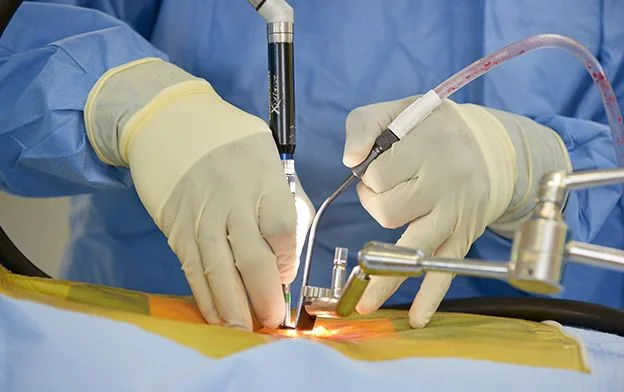
Microscopic Discectomy (Tubular) is a minimally invasive spine surgery performed to treat a slipped disc (lumbar disc herniation) that is compressing a nerve in the lower back.
The goal of the surgery is to remove the portion of the disc causing nerve compression while preserving the normal structures of the spine. The procedure is performed through a small incision using specialized tubular retractors and an operating microscope, allowing the surgeon to access the affected area with minimal disruption to surrounding muscles.
This is a minimally invasive microscopic spine surgery and is one of the most commonly performed procedures for sciatica caused by a lumbar disc herniation.
✓ Symptoms persist despite medications and physiotherapy
✓ Leg pain is more severe than back pain
✓ MRI confirms nerve compression by a slipped disc
✓ Progressive weakness develops
✓ Foot drop is present
✓ Quality of life is significantly affected
✓ Symptoms interfere with work, sleep or daily activities
How Is The Surgery Performed?
Step 1
The procedure is performed under general anesthesia. The patient lies face down on a specially designed operating table.
Step 2
A small skin incision, usually about 18–25 mm, is made over the affected spinal level.
Step 3
Specialized tubular retractors are inserted through the muscles, gently separating rather than cutting them.
Step 4
Using an operating microscope, the compressed nerve root is identified and protected. The herniated disc fragment causing compression is carefully removed.
Step 5
Once the nerve is completely decompressed, the instruments are removed and the incision is closed with cosmetic sutures.
Most procedures are completed within 45–90 minutes depending on complexity.
What Are The Advantages?
Potential benefits include:
Smaller incision
Less blood loss
Reduced muscle injury
Less postoperative pain
Faster recovery
Shorter hospital stay
Earlier mobilization
Reduced need for pain medications
Quicker return to work
Improved quality of life
Compared to traditional open surgery, tubular microscopic surgery preserves normal anatomy more effectively.
What Are The Risks?
Every surgical procedure carries certain theoretical risks and potential complications. However, every effort is made to minimise these risks through meticulous surgical planning, advanced technology and comprehensive patient optimisation.
At Bombay Spine Clinic™ under care of Dr Siddharth Katkade, Microscopic Discectomy is performed using a high-definition operating microscope, specialised minimally invasive tubular retractors and modern microsurgical instruments. These technologies allow precise nerve decompression through a small incision while minimising disruption to surrounding muscles and tissues.
In addition, every patient undergoes a thorough pre-operative assessment. Depending on individual health requirements, this may involve evaluation and optimisation by physicians, cardiologists, anaesthetists and other medical specialists. This multidisciplinary approach helps improve surgical safety, recovery and overall outcomes.
Potential risks that are discussed with patients include:
Infection
Bleeding
Dural tear
Nerve injury
Persistent numbness
Persistent weakness
Recurrent disc herniation
Incomplete symptom relief
Rare need for revision surgery
Fortunately, the incidence of significant complications is low when surgery is performed for appropriate indications, following careful patient selection, optimisation and modern minimally invasive surgical principles.
Preparing For Surgery
Before surgery:
Clinical evaluation
MRI review
Blood investigations
Medical fitness assessment
Medication review
Anaesthesia assessment
Patients should inform their doctor regarding:
Blood thinning medications
Diabetes
Heart disease
Previous surgeries
Allergies
Smoking history
Smoking cessation is strongly encouraged as it improves healing and recovery.
What Happens During Hospital Stay?
Day of Surgery
Hospital admission
Surgery
Recovery room observation
Early mobilization under supervision
First 24 Hours
Pain management
Walking with assistance
Physiotherapy instructions
Wound care guidance
Discharge
Most patients are discharged within:
24–48 hours
Selected patients may even be discharged the next day.
Recovery After Surgery
Week 1
Expected symptoms:
Mild wound discomfort
Improvement in leg pain
Walking encouraged
Light daily activities permitted
Weeks 2–6
Gradual increase in walking
Return to desk work (in many patients)
Physiotherapy if required
Follow-up consultation
6 Weeks–3 Months
Progressive strengthening exercises
Return to normal routine
Significant improvement in function
Long-Term Recovery
Most patients experience substantial relief of leg pain and improved quality of life. Maintaining good posture, core strength and spinal fitness helps reduce recurrence risk.
Frequently Asked Questions
1. Why do I need this surgery?
Because a slipped disc is compressing a nerve and causing persistent symptoms that have not improved with conservative treatment. The goal of surgery is to relieve nerve compression, reduce pain and improve function.
2. Are there alternatives to surgery?
Yes. Many patients improve with medications, physiotherapy, activity modification and time. Surgery is usually recommended when symptoms persist despite adequate conservative treatment or when neurological deficits such as weakness or foot drop develop.
3. Will I have a large scar?
No. Microscopic Discectomy (Tubular) is performed through a small incision, typically around 14–22 mm, resulting in a cosmetically acceptable scar.
4. How long will I stay in hospital?
Most patients stay in hospital for 24–48 hours. Selected patients may even be discharged the following day depending on their recovery.
5. When can I start walking after surgery?
Most patients are encouraged to start walking within a few hours after surgery under supervision. Early walking is an important part of recovery and helps improve circulation, reduce stiffness and promote faster rehabilitation.
6. When can I start outdoor walking?
Indoor walking is encouraged immediately after surgery. Most patients can gradually begin outdoor walking after approximately 1 week, depending on comfort and recovery.
7. When can I travel after surgery?
Short local travel is usually possible after about 2 weeks. Longer journeys, including outstation travel and air travel, are generally recommended after 6–8 weeks, depending on recovery and your surgeon’s advice.
8. When can I return to work?
Recovery varies between individuals and depends on the nature of work.
Typical timelines are:
Work From Home (WFH): Approximately 2 weeks
Office-Based Work: Approximately 3–4 weeks
Light Physical Work: Approximately 4–6 weeks
Heavy Manual Labour: Approximately 8–12 weeks
Your surgeon will provide personalised guidance based on your recovery progress.
9. When can I drive, exercise, dance or resume sports?
Driving is usually permitted after approximately 3–4 weeks, provided you are comfortable and no longer require strong pain medications.
Light exercises and physiotherapy are started gradually under guidance. Sports, dancing, gym workouts and other high-impact activities are typically resumed after 10–12 weeks, depending on recovery and fitness levels.
10. What is the success rate of Microscopic Discectomy?
When performed for appropriate indications, Microscopic Discectomy has an excellent success rate in relieving leg pain (sciatica) caused by nerve compression from a slipped disc.
The majority of patients experience significant improvement in leg pain, walking ability and overall quality of life. Outcomes are generally best when surgery is performed before severe or prolonged nerve damage develops.
Individual results may vary depending on factors such as the duration of symptoms, severity of nerve compression, presence of weakness, overall health and adherence to post-operative rehabilitation protocols.
11. Can the problem recur?
Yes. Although Microscopic Discectomy has an excellent success rate, disc herniation can occasionally recur. Maintaining a healthy weight, good posture, core muscle strength and proper lifting techniques can help reduce this risk.Myth vs Fact
Myth:
A slipped disc always requires surgery.
Fact:
Most slipped discs improve without surgery. Surgery is reserved for patients with persistent symptoms, neurological deficits or significant functional limitations.
Myth:
Spine surgery always causes paralysis.
Fact:
Modern microscopic spine surgery is generally safe when performed by trained spine surgeons for appropriate indications.
When Should I Contact My Surgeon After Surgery?
Contact your surgeon if you experience:
Fever
Increasing wound discharge
Severe back or leg pain
Progressive weakness
Difficulty passing urine
New numbness
Persistent headache after surgery
Related Conditions
Slip Disc (Disc Herniation)
Sciatica
Lumbar Radiculopathy
Foot Drop
Related Procedures
Endoscopic Discectomy (Biportal)
MIS TLIF (Tubular)
MIS Decompression (Tubular)
Need Expert Advice?
If you have been advised spine surgery or would like a second opinion regarding your MRI findings, you may schedule a consultation or upload your MRI for specialist review.
Dr. Siddharth KatkadeConsultant Spine Surgeon
Bombay Spine Clinic™
Need Clinical Evaluation?
Consult with Dr. Siddharth Katkade (MBBS, MS, DNB, FASSI Germany/UK) for accurate diagnosis and personalized spine treatment.