Endoscopic Decompression Surgery (Biportal Endoscopic Spine Surgery – UBE)
Ultra-Minimally Invasive Surgery for Lumbar Canal Stenosis, Sciatica & Nerve Compression
What Is This Surgery?
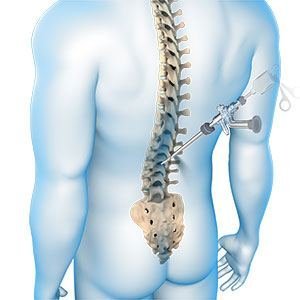
Endoscopic Decompression Surgery using the Unilateral Biportal Endoscopic (UBE) technique is one of the most advanced forms of ultra-minimally invasive spine surgery. It is performed to relieve pressure on the spinal nerves caused by lumbar canal stenosis, ligament thickening, slipped discs or bone spurs, while preserving the normal muscles and stability of the spine.
Unlike conventional open surgery, UBE uses two tiny skin incisions (approximately 8–10 mm each). One portal is used to introduce a high-definition endoscopic camera, while the other is used for specialised surgical instruments. Continuous saline irrigation provides a clear, magnified view, allowing precise decompression with minimal damage to surrounding tissues.
The goals of the surgery are to:
Relieve pressure on compressed spinal nerves
Reduce leg pain (Sciatica)
Improve walking distance
Relieve numbness and weakness
Preserve normal spinal muscles and ligaments as much as possible
Minimise postoperative pain
Enable faster recovery and early return to normal activities
UBE is considered an ultra-minimally invasive, muscle-preserving, motion-preserving spinal decompression technique and is an excellent option for appropriately selected patients with degenerative lumbar spinal disorders.
UBE is particularly beneficial for patients with lumbar canal stenosis, where decompression of the spinal nerves can significantly improve walking ability and quality of life.
Who Is A Suitable Candidate?
You may be a suitable candidate if:
✓ Symptoms persist despite medications and physiotherapy.
✓ MRI confirms lumbar nerve compression.
✓ Walking distance is significantly reduced because of spinal stenosis.
✓ Leg pain is more severe than back pain.
✓ Progressive numbness or weakness develops.
✓ Image-guided injections have not provided lasting relief.
✓ Quality of life is significantly affected.
✓ Your spinal stability is preserved and fusion surgery is not required.
How Is The Surgery Performed?
Step 1
The procedure is performed under general anesthesia. The patient is positioned comfortably on a specialised spine surgery table.
Step 2
Two tiny skin incisions (approximately 8–10 mm each) are made over the affected spinal level.
One portal accommodates the endoscopic camera, while the second portal allows insertion of specialised surgical instruments.
Step 3
Continuous saline irrigation is used to create a clear surgical field. A high-definition endoscope provides excellent magnification and illumination, enabling the surgeon to work with exceptional precision.
Step 4
Specialised endoscopic instruments are used to carefully remove the structures compressing the spinal nerves, including thickened ligaments, bone spurs or herniated disc fragments. Every effort is made to preserve the normal muscles, joints and stabilising structures of the spine.
Step 5
After confirming complete nerve decompression, the instruments are removed and the tiny skin incisions are closed with one or two stitches or skin adhesive.
Most UBE decompression procedures are completed within 60–120 minutes, depending on the number of spinal levels being treated.
What Are The Advantages?
Potential benefits include:
Two tiny cosmetic incisions
Minimal muscle damage
Excellent magnified surgical visualization
Reduced blood loss
Less postoperative pain
Preservation of normal spinal muscles
Preservation of spinal stability in appropriate cases
Faster mobilisation
Shorter hospital stay
Early return to work
Reduced infection risk
Excellent cosmetic outcome
Improved walking ability
Significant relief of leg pain and numbness
Improved quality of life
Compared with conventional open decompression, UBE offers effective nerve decompression while minimising tissue disruption, resulting in faster recovery for many patients.
What Are The Risks?
Every surgical procedure carries certain theoretical risks and potential complications. However, every effort is made to minimise these risks through meticulous surgical planning, advanced technology and comprehensive patient optimisation.
At Bombay Spine Clinic™, Endoscopic Decompression Surgery is performed using a high-definition endoscopic system, specialised UBE instruments and modern minimally invasive techniques. The magnified endoscopic view allows precise decompression of the spinal nerves while preserving healthy muscles, ligaments and joints.
In addition, every patient undergoes a detailed pre-operative assessment. Depending on individual health requirements, this may involve evaluation and optimisation by physicians, cardiologists, anaesthetists and other specialists. This multidisciplinary approach helps improve surgical safety, recovery and overall outcomes.
Potential risks discussed with patients include:
Infection
Bleeding
Dural tear (CSF leak)
Nerve injury
Persistent symptoms
Recurrent disc herniation
Residual stenosis requiring revision surgery
Postoperative hematoma
Rare spinal instability requiring future fusion
Rare need for further surgery
Fortunately, significant complications are uncommon when surgery is performed by experienced spine surgeons using modern endoscopic techniques.
Preparing For Surgery
Before surgery:
Clinical evaluation
MRI review
Standing X-rays
CT scan (if required)
Blood investigations
Medical fitness assessment
Medication review
Anaesthesia assessment
Patients should inform their doctor regarding:
Blood thinning medications
Diabetes
Heart disease
Previous spinal surgeries
Allergies
Smoking history
Smoking cessation is strongly encouraged to improve healing and recovery.
What Happens During Hospital Stay?
Day of Surgery
Hospital admission
Surgery
Recovery room observation
Pain management
Early neurological assessment
First 24 Hours
Assisted walking within a few hours
Physiotherapy guidance
Wound care instructions
Stair climbing if comfortable
Discharge
Most patients are discharged within:
24 hours
Many patients return home the same day or the following morning, depending on recovery and medical fitness.
Recovery After Surgery
Week 1
Expected symptoms:
Mild incision discomfort
Significant improvement in leg pain
Walking encouraged from the day of surgery
Light daily activities permitted
Weeks 2–6
Progressive walking programme
Gradual return to routine activities
Physiotherapy if advised
Follow-up consultation
6 Weeks–3 Months
Core strengthening exercises
Functional rehabilitation
Return to unrestricted daily activities
Long-Term Recovery
Most patients experience excellent improvement in leg pain, walking ability and quality of life. Maintaining a healthy body weight, regular exercise and good posture helps reduce the risk of future spinal degeneration.
When Can I Return To Work?
Occupation
Approximate Timeline
Desk Job
2 weeks
Light Work
3–4 weeks
Manual Labour
6–8 weeks
Driving
2 weeks
Sports
10–12 weeks
Frequently Asked Questions
1. Why do I need this surgery?
Because your spinal nerves are compressed by lumbar canal stenosis, ligament thickening or a slipped disc, causing persistent leg pain, numbness or difficulty walking despite conservative treatment.
2. Are there alternatives to surgery?
Yes. Many patients improve with medications, physiotherapy and image-guided spinal injections. Surgery is recommended when symptoms persist or neurological function deteriorates.
3. Will I have a large scar?
No. UBE uses two tiny incisions, each approximately 8–10 mm, resulting in excellent cosmetic healing.
4. How long will I stay in hospital?
Most patients are discharged within 24 hours, and selected patients may even be suitable for day-care surgery.
5. When can I start walking?
Walking is encouraged within a few hours after surgery under supervision.
6. When can I climb stairs?
Most patients can safely climb stairs before discharge.
7. When can I drive?
Driving is generally permitted after approximately 2 weeks, once pain is well controlled and movements are comfortable.
8. When can I return to work?
Most office workers return within 2 weeks. Physically demanding occupations generally require 6–8 weeks.
9. What is the success rate?
When performed for appropriate indications, UBE Endoscopic Decompression has an excellent success rate in relieving leg pain caused by nerve compression. Most patients experience significant improvement in walking ability, numbness and quality of life.
10. Can the problem recur?
Although surgery relieves the current nerve compression, age-related spinal degeneration may continue over time. Maintaining spinal fitness, core strength and healthy lifestyle habits can help reduce future problems.
Myth vs Fact
Myth:
Endoscopic spine surgery is suitable for every spinal condition.
Fact:
Endoscopic surgery is an excellent option for many—but not all—patients. The most appropriate surgical technique depends on your diagnosis, MRI findings, spinal stability and overall health.
Myth:
Tiny incisions mean the surgery is less effective.
Fact:
UBE provides excellent magnified visualization, allowing complete nerve decompression through very small incisions while preserving healthy tissues.
When Should I Contact My Surgeon After Surgery?
Contact your surgeon if you experience:
Fever
Increasing wound discharge
Progressive leg weakness
Severe back or leg pain
Difficulty passing urine
New numbness
Difficulty walking
Sudden worsening of symptoms
Related Conditions
Lumbar Canal Stenosis
Sciatica
Lumbar Disc Herniation
Foraminal Stenosis
Degenerative Lumbar Spine Disease
Related Procedures
Microscopic Discectomy (Tubular)
MIS Decompression (Tubular)
MIS TLIF (Tubular)
Image-Guided Epidural Steroid Injection
Need Expert Advice?
If you have persistent leg pain, lumbar canal stenosis or have been advised spine surgery, you may schedule a consultation or upload your MRI for specialist review.
Dr. Siddharth KatkadeConsultant Spine Surgeon
Bombay Spine Clinic™
Need Clinical Evaluation?
Consult with Dr. Siddharth Katkade (MBBS, MS, DNB, FASSI Germany/UK) for accurate diagnosis and personalized spine treatment.