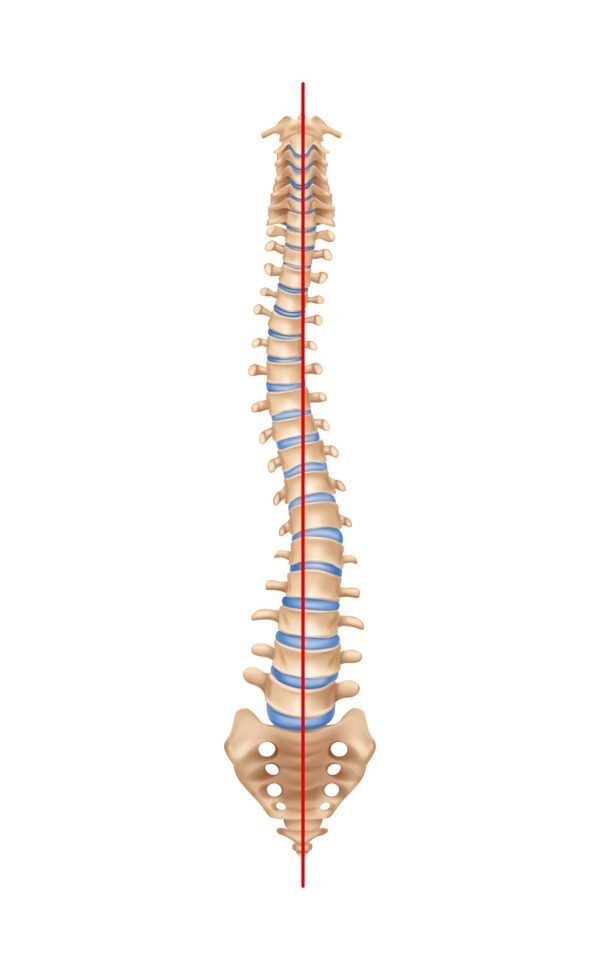
Scoliosis is a condition in which the spine develops an abnormal sideways curvature when viewed from behind. Instead of appearing straight, the spine curves into an “S” shape or “C” shape. In many cases, the vertebrae may also rotate, causing asymmetry of the shoulders, chest or waist.
Scoliosis can occur in children, adolescents and adults. While mild scoliosis may not cause significant symptoms, moderate or severe curves can lead to cosmetic concerns, pain, imbalance and, in rare cases, breathing difficulties.
Early detection is important because some spinal curves may progress over time.
Common Symptoms
Symptoms vary depending on the severity and type of scoliosis.
Patients may experience:
Visible Signs
Uneven shoulders
One shoulder blade appearing more prominent
Uneven waistline
One hip higher than the other
Leaning to one side
Rib prominence when bending forward
Pain-Related Symptoms
Back pain
Muscle fatigue
Stiffness
Difficulty standing for prolonged periods
Advanced Symptoms
Progressive spinal deformity
Trunk imbalance
Reduced exercise tolerance
Breathing difficulty (in severe cases)
Many children and adolescents with scoliosis have no pain and may first notice the deformity through physical appearance.
Causes & Risk Factors
Adolescent Idiopathic Scoliosis
The most common type.
The exact cause is unknown and typically develops during growth spurts in adolescence.
Congenital Scoliosis
Present at birth due to abnormal development of spinal vertebrae.
Neuromuscular Scoliosis
Associated with neurological or muscular conditions such as:
Cerebral palsy
Muscular dystrophy
Spinal muscular atrophy
Degenerative (Adult) Scoliosis
Develops later in life due to age-related degeneration of discs and spinal joints.
Risk factors include:
Family history
Female gender (higher risk of progression)
Rapid growth during adolescence
Pre-existing neuromuscular disorders
When Should You Seek Medical Advice?
Medical evaluation is recommended if:
Uneven shoulders are noticed
One side of the chest or ribs appears more prominent
The spine appears curved
Clothing fits unevenly
Progressive back deformity develops
Back pain becomes persistent
Walking balance is affected
Symptoms interfere with daily activities
Seek Immediate Medical Attention If:
Progressive weakness develops
Significant balance problems occur
Breathing difficulties develop
Rapid curve progression is noticed
How Is It Diagnosed?
Clinical Examination
A detailed examination evaluates:
Shoulder symmetry
Waist symmetry
Rib prominence
Trunk balance
Neurological function
Adam’s Forward Bend Test
A simple clinical test used to detect rotational deformity of the spine.
X-Ray
Standing whole-spine X-rays are the most important investigation.
They help determine:
Curve severity
Curve location
Skeletal maturity
Progression risk
The degree of curvature is measured using the Cobb Angle.
MRI
MRI may be recommended when:
Neurological symptoms are present
Congenital scoliosis is suspected
Atypical curve patterns are identified
CT Scan
Occasionally required for detailed evaluation of complex deformities.
Blood Tests
Usually not required unless underlying medical conditions are suspected.
Treatment Options
Non-Surgical Treatment
Treatment depends on:
Patient age
Curve severity
Skeletal maturity
Risk of progression
Non-surgical management may include:
Observation and regular monitoring
Physiotherapy
Scoliosis-specific exercises
Postural training
Bracing (in selected growing children)
The aim is to prevent progression and maintain function.
Surgical Treatment
Surgery may be considered when:
Curves continue to progress
Significant deformity develops
Severe curves are present
Balance becomes affected
Pain becomes disabling
Lung function may be compromised
Common surgical procedures include:
Posterior Spinal Fusion
Deformity Correction Surgery
Instrumented Scoliosis Correction
Growth-Friendly Procedures (in selected children)
Modern scoliosis surgery uses specialized implants and advanced correction techniques to improve spinal alignment while preserving function.
Frequently Asked Questions
1. What is Scoliosis?
Scoliosis is an abnormal sideways curvature of the spine.
2. Can poor posture cause Scoliosis?
No. Poor posture may make spinal asymmetry appear worse but does not cause true structural scoliosis.
3. Is Scoliosis hereditary?
Family history can increase the risk of developing scoliosis.
4. Can adults develop Scoliosis?
Yes. Degenerative scoliosis can occur due to age-related changes in the spine.
5. Does every patient need surgery?
No. Most patients do not require surgery and can be managed with observation, exercises or bracing.
6. What is a Cobb Angle?
The Cobb Angle is the standard measurement used to assess the severity of scoliosis.
7. Can exercises cure Scoliosis?
Exercises may improve posture, strength and function, but they do not completely correct a structural spinal curve.
8. Is Scoliosis painful?
Many adolescents have no pain. Adults may develop pain due to degeneration and imbalance.
9. Can Scoliosis worsen with time?
Yes. Some curves may progress, particularly during periods of rapid growth or due to adult degeneration.
10. Is surgery safe?
Modern scoliosis surgery is highly specialized and, when appropriately indicated, can provide significant improvement in alignment, balance and quality of life.
Related Conditions
Kyphosis
Osteoporosis
Spinal Fracture
Ankylosing Spondylitis
Myelopathy
Degenerative Spine Disorders
When Should You Consult a Spine Specialist?
If you notice spinal curvature, uneven shoulders, trunk imbalance, persistent back pain or concerns regarding scoliosis progression, early consultation with a spine specialist can help establish an accurate diagnosis and determine the most appropriate management plan.
Early detection is particularly important in children and adolescents, where timely intervention may help prevent progression of the deformity.
Need Expert Advice?
Book a consultation with Dr. Siddharth Katkade or upload your X-rays/MRI for review through our Patient Resource Centre.
Need Clinical Evaluation?
Consult with Dr. Siddharth Katkade (MBBS, MS, DNB, FASSI Germany/UK) for accurate diagnosis and personalized spine treatment.