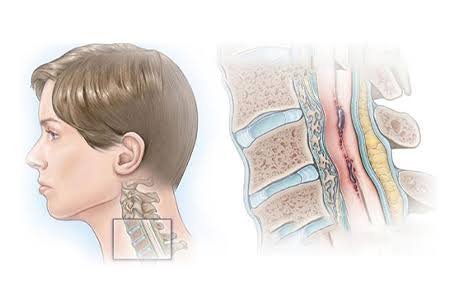
Myelopathy refers to dysfunction of the spinal cord caused by compression or injury. In adults, the most common cause is cervical myelopathy, where age-related degeneration of the cervical spine leads to narrowing of the spinal canal and compression of the spinal cord.
Unlike a pinched nerve, which typically affects a single arm or leg, spinal cord compression can affect both the upper and lower limbs and may progressively impair balance, coordination, walking and hand function.
Myelopathy is an important condition because delayed diagnosis and treatment may result in permanent neurological deficits.
Common Symptoms
Symptoms often develop gradually and may initially be mistaken for normal ageing.
Patients may experience:
Hand Symptoms
Hand clumsiness
Difficulty buttoning clothes
Difficulty writing
Difficulty handling coins or keys
Frequent dropping of objects
Loss of fine motor skills
Walking & Balance Symptoms
Gait imbalance
Feeling unsteady while walking
Frequent stumbling
Difficulty walking in the dark
Reduced walking confidence
Limb Symptoms
Tingling or numbness in the hands
Weakness in the arms or legs
Stiffness in the legs
Electric shock sensation down the spine on bending the neck (Lhermitte’s phenomenon)
Advanced Symptoms
Difficulty climbing stairs
Significant walking difficulty
Loss of bladder or bowel control
Causes & Risk Factors
Common causes include:
Cervical Spondylosis
The most common cause of myelopathy in adults.
Cervical Disc Herniation
A slipped disc in the neck may compress the spinal cord.
Ossification of the Posterior Longitudinal Ligament (OPLL)
Abnormal thickening of spinal ligaments causing canal narrowing.
Congenital Narrow Spinal Canal
Some individuals are born with a smaller spinal canal.
Trauma
Spinal cord compression following injury.
Tumors & Infections
Rarely, spinal tumors or infections may compress the spinal cord.
Risk factors include:
Increasing age
Long-standing cervical spondylosis
Previous neck injuries
Congenital spinal canal narrowing
When Should You Seek Medical Advice?
Medical evaluation is recommended if you experience:
Hand clumsiness
Difficulty buttoning clothes
Frequent dropping of objects
Tingling in both hands
Balance problems
Unsteady walking
Progressive weakness
Difficulty with fine motor activities
Seek Immediate Medical Attention If:
Walking rapidly worsens
Significant weakness develops
Bladder or bowel control is affected
Sudden neurological deterioration occurs
These symptoms may indicate severe spinal cord compression requiring urgent evaluation.
How Is It Diagnosed?
Clinical Examination
A detailed neurological examination is crucial.
Your doctor may assess:
Hand function
Balance
Walking pattern
Reflexes
Muscle strength
Sensory changes
X-Ray
May demonstrate:
Cervical spondylosis
Alignment abnormalities
Degenerative changes
MRI
MRI is the most important investigation.
It helps identify:
Spinal cord compression
Disc prolapse
Canal stenosis
Cord signal changes
Severity of compression
CT Scan
May be useful for evaluating bony stenosis and OPLL.
Blood Tests
Usually not required unless infection, inflammatory disease or other systemic conditions are suspected.
Treatment Options
Non-Surgical Treatment
Non-surgical treatment may be considered in carefully selected patients with mild symptoms.
This may include:
Activity modification
Physiotherapy (under supervision)
Posture correction
Regular monitoring
However, conservative treatment does not remove spinal cord compression.
Surgical Treatment
Surgery is commonly recommended when:
Spinal cord compression is significant
Symptoms are progressive
Balance problems develop
Weakness develops
Functional impairment occurs
The goal of surgery is to:
Relieve spinal cord compression
Prevent further neurological deterioration
Improve function where possible
Common procedures include:
Cervical Decompression Surgery
Cervical Laminectomy
Cervical Laminoplasty
Anterior Cervical Discectomy & Fusion (ACDF)
Cervical Disc Replacement (selected patients)
The choice of procedure depends on the underlying pathology and spinal alignment.
Frequently Asked Questions
1. What is Myelopathy?
Myelopathy refers to dysfunction of the spinal cord caused by compression or injury.
2. How is Myelopathy different from a pinched nerve?
A pinched nerve usually affects one limb, whereas spinal cord compression may affect both hands, both legs, balance and coordination.
3. Is hand clumsiness a warning sign?
Yes. Difficulty with buttons, handwriting or dropping objects may be early signs of cervical myelopathy.
4. Can Myelopathy affect walking?
Yes. Gait imbalance and difficulty walking are common symptoms.
5. Is Myelopathy serious?
Yes. Untreated spinal cord compression may result in permanent neurological impairment.
6. Can physiotherapy cure Myelopathy?
Physiotherapy cannot remove spinal cord compression but may help selected patients manage symptoms.
7. Does every patient need surgery?
Not necessarily. However, surgery is often recommended when symptoms are progressive or significant spinal cord compression is present.
8. Can Myelopathy worsen over time?
Yes. Many patients experience gradual progression if compression remains untreated.
9. Is MRI necessary?
MRI is usually essential for confirming the diagnosis and determining the severity of spinal cord compression.
10. Can recovery occur after surgery?
Many patients experience improvement or stabilization after surgery, although recovery depends on the severity and duration of compression.
Related Conditions
Cervical Spondylosis
Slip Disc (Cervical Disc Herniation)
Lumbar Canal Stenosis
Peripheral Neuropathy
Spinal Tumor
Spinal Tuberculosis
When Should You Consult a Spine Specialist?
If you experience hand clumsiness, balance problems, difficulty walking, progressive weakness or other symptoms suggestive of spinal cord compression, early evaluation by a spine specialist is strongly recommended.
Timely diagnosis and treatment can help prevent permanent neurological damage and preserve function.
Need Expert Advice?
Book a consultation with Dr. Siddharth Katkade or upload your MRI/report for review through our Patient Resource Centre.
Need Clinical Evaluation?
Consult with Dr. Siddharth Katkade (MBBS, MS, DNB, FASSI Germany/UK) for accurate diagnosis and personalized spine treatment.