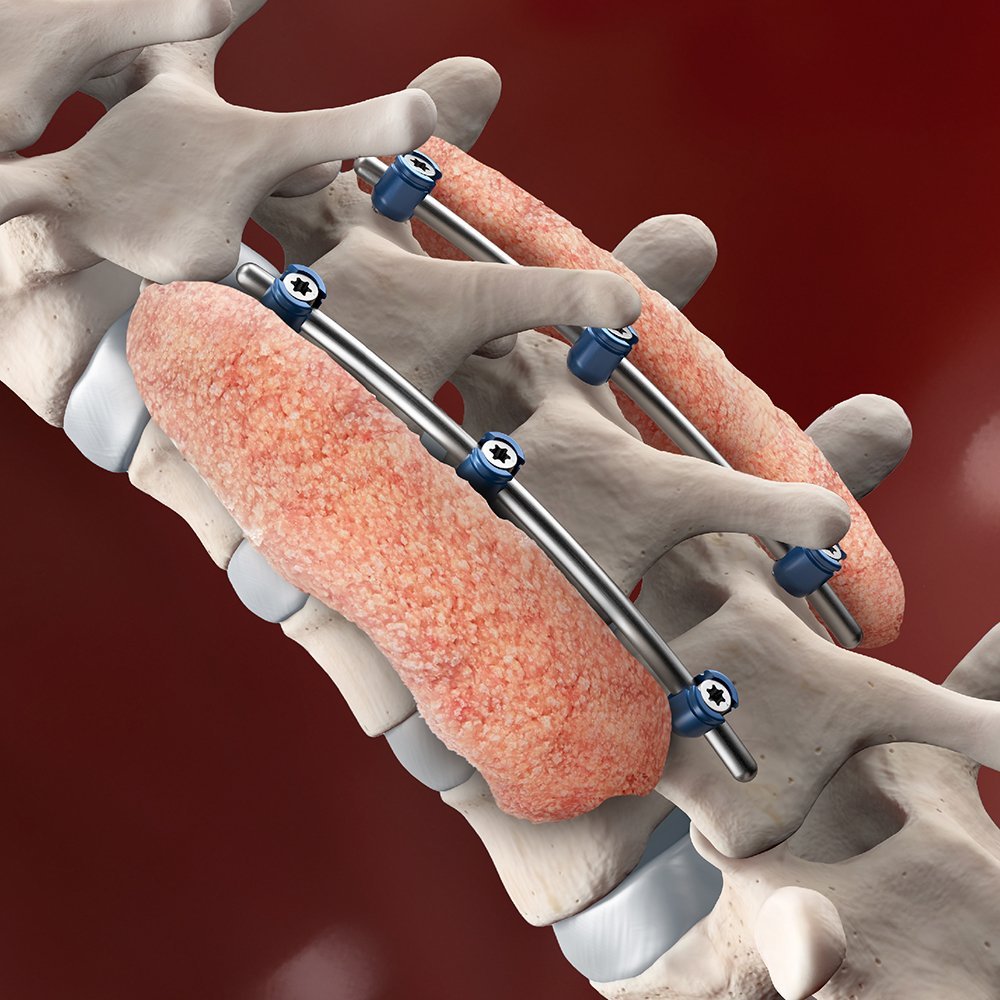
Minimally Invasive Spine Fixation (MIS Fixation) is an advanced spine surgery performed to stabilise the spine using specially designed screws and rods inserted through small skin incisions instead of a large open incision.
This procedure is recommended when the spine has become unstable due to conditions such as fractures, spondylolisthesis, spinal infections, tumours or degenerative disorders. The aim is to restore spinal stability, protect the nerves and spinal cord, relieve pain, and allow patients to return to normal daily activities.
Unlike traditional open surgery, MIS Fixation uses specialised instruments and X-ray or navigation guidance to place implants accurately while minimising damage to the surrounding muscles. In many cases, this results in less pain, reduced blood loss, shorter hospital stay and faster recovery.
Depending on the underlying condition, MIS Fixation may be performed alone or combined with decompression or spinal fusion.
Why Is This Surgery Performed?
MIS Fixation may be recommended for patients with spinal instability caused by:
Spondylolisthesis (slipped vertebra)
Spinal fractures (traumatic or osteoporotic)
Degenerative spinal instability
Spinal infections such as TB Spine or spondylodiscitis
Spinal tumours affecting the vertebrae
Failed previous spine surgery requiring stabilisation
Selected cases of lumbar canal stenosis after decompression
Common symptoms that may lead to surgery include:
Persistent back pain
Neck pain (in selected cervical procedures)
Sciatica or leg pain
Tingling and numbness
Weakness in the arms or legs
Difficulty walking
Pain due to spinal instability
Progressive spinal deformity
The decision to perform MIS Fixation is based on your symptoms, physical examination and imaging findings, rather than MRI findings alone.
Who Is A Suitable Candidate?
You may be a suitable candidate for MIS Fixation if:
✓ You have spinal instability confirmed on imaging.
✓ Symptoms persist despite medications and physiotherapy.
✓ Progressive neurological weakness develops.
✓ A spinal fracture requires stabilisation.
✓ You have spondylolisthesis causing nerve compression.
✓ Spinal infection or tumour has weakened the vertebrae.
✓ MRI and CT findings correlate with your symptoms.
✓ Your pain significantly affects your daily activities and quality of life.
Your spine surgeon will determine whether MIS Fixation is the most appropriate procedure after a thorough evaluation.
How Is The Surgery Performed?
Step 1 – Anaesthesia and Positioning
The procedure is performed under general anaesthesia. You will lie face down on a specialised operating table that allows safe positioning while protecting pressure points.
Step 2 – Small Skin Incisions
Instead of one large incision, several small incisions are made over the affected spinal levels. These provide access for specialised instruments while preserving the surrounding muscles.
Step 3 – Image-Guided Implant Placement
Using fluoroscopy (real-time X-ray) or advanced navigation systems, pedicle screws are inserted accurately into the affected vertebrae through minimally invasive techniques.
Step 4 – Rod Placement and Stabilisation
Titanium rods are connected to the screws, restoring spinal alignment and providing immediate stability. Depending on the underlying condition, decompression or spinal fusion may also be performed.
Step 5 – Closure and Recovery
The incisions are closed with absorbable sutures or skin staples and covered with sterile dressings. Patients are then shifted to the recovery area for close monitoring.
What Are The Advantages?
Compared with traditional open spine surgery, MIS Fixation offers several potential benefits:
Smaller skin incisions
Less blood loss
Reduced muscle damage
Less post-operative pain
Lower risk of wound complications
Shorter hospital stay
Earlier mobilisation
Faster recovery
Smaller scars
Reduced need for blood transfusion
Earlier return to work and daily activities
Improved quality of life
Not every patient is suitable for minimally invasive surgery. Your surgeon will recommend the safest and most appropriate technique for your condition.
What Are The Risks?
Every surgical procedure carries some risks.
Potential complications of MIS Fixation may include:
Infection
Bleeding
Dural tear (CSF leak)
Nerve injury
Persistent pain
Implant loosening or breakage
Screw malposition (rare)
Failure of bone fusion (if fusion is performed)
Adjacent segment degeneration over time
Blood clots
Need for revision surgery
These complications are uncommon, and every effort is made to minimise risk through careful planning, meticulous surgical technique and appropriate post-operative care.
Preparing For Surgery
Before surgery, you will undergo a detailed pre-operative assessment, including:
Clinical evaluation
MRI and CT scan review
Dynamic X-rays (if required)
Blood investigations
ECG and Chest X-ray (when indicated)
Medical fitness assessment
Anaesthesia evaluation
Bone density assessment (if osteoporosis is suspected)
Medication review
Please inform your doctor if you:
Take blood thinners
Have diabetes
Have heart or lung disease
Have kidney disease
Smoke
Have undergone previous spine surgery
Have any allergies to medications
Stopping smoking before surgery improves bone healing and reduces complications.
What Happens During Hospital Stay?
Day of Surgery
Hospital admission
Final medical review
MIS Fixation surgery
Recovery room monitoring
Pain control begins immediately
First 24 Hours
Assisted sitting and standing
Walking with supervision
Pain management
Physiotherapy assessment
Wound inspection
Discharge
Most patients are discharged within:
2–4 days, depending on the complexity of the surgery and overall recovery.
Patients undergoing fixation for fractures, infections or complex conditions may require a slightly longer hospital stay.
Recovery After Surgery
Week 1
You may experience:
Mild surgical pain
Temporary stiffness
Walking encouraged several times daily
Wound care instructions
Gradual increase in daily activities
Weeks 2–6
Longer walking sessions
Gradual return to routine household activities
Physiotherapy if advised
Follow-up consultation
Progressive improvement in mobility
6 Weeks–3 Months
Strengthening exercises begin
Most patients return to normal daily activities
Bone healing continues
Gradual return to work depending on occupation
Long-Term Recovery
Complete recovery varies depending on the underlying condition and whether spinal fusion was performed.
Maintaining a healthy weight, exercising regularly, avoiding smoking and following rehabilitation instructions contribute to better long-term outcomes.
When Can I Return To Work?
Occupation
Approximate Timeline
Desk Job
4–6 weeks
Light Work
6–8 weeks
Manual Labour
3–6 months
Driving
4–6 weeks
Sports
3–6 months (after surgeon's approval)
Recovery timelines vary depending on the complexity of surgery and individual healing.
Frequently Asked Questions
1. Why do I need MIS Fixation?
MIS Fixation is recommended when your spine has become unstable due to fractures, spondylolisthesis, infection, tumours or degenerative conditions.
2. Are there alternatives to surgery?
Some patients improve with medications, physiotherapy or spinal injections. However, when significant spinal instability or neurological compromise is present, surgery may be the most appropriate treatment.
3. Will I have a large scar?
No. MIS Fixation is performed through several small incisions, which generally result in smaller scars than traditional open surgery.
4. How long will I stay in hospital?
Most patients stay in hospital for 2–4 days, depending on the complexity of surgery and overall recovery.
5. When can I walk?
Walking usually begins within 24 hours after surgery under the supervision of your healthcare team.
6. When can I climb stairs?
Most patients can climb stairs safely before discharge, provided they are comfortable and medically stable.
7. When can I drive?
Driving is usually possible after 4–6 weeks, provided pain is well controlled, you are no longer taking strong pain medications and your surgeon has approved it.
8. When can I return to work?
Patients with desk jobs may return within 4–6 weeks, while physically demanding jobs often require 3–6 months.
9. What is the success rate?
When performed for the appropriate indication, MIS Fixation has high success rates in relieving pain caused by spinal instability, improving function and restoring spinal stability. Outcomes depend on the underlying diagnosis, bone quality, overall health and adherence to rehabilitation.
10. Can the problem recur?
The treated spinal segment is stabilised, but age-related changes may occur at other spinal levels over time. Maintaining a healthy lifestyle and following rehabilitation advice helps reduce future spinal problems.
Myth vs Fact
Myth:
MIS Fixation is a temporary solution because the screws will eventually loosen.
Fact:
Modern titanium screws and rods are designed to provide long-term spinal stability. When bone healing occurs successfully, most implants remain securely in place for life and do not require removal.
When Should I Contact My Surgeon After Surgery?
Contact your surgeon immediately if you experience:
Fever
Increasing wound redness or discharge
Progressive weakness
Severe or worsening pain
Difficulty passing urine
Loss of bladder or bowel control
New numbness
Difficulty walking
Calf swelling or sudden shortness of breath
Early recognition of complications allows prompt treatment.
Related Conditions
Spondylolisthesis
Lumbar Canal Stenosis
Spinal Fractures
TB Spine
Spinal Tumours
Degenerative Spine Disease
Related Procedures
MIS TLIF (Minimally Invasive Transforaminal Lumbar Interbody Fusion)
Endoscopic Spine Surgery (UBE)
Microscopic Decompression Surgery
Vertebroplasty & Kyphoplasty
Revision Spine Surgery
Need Expert Advice?
If you have been advised spinal fixation surgery or would like a second opinion, our team can help you understand your diagnosis and discuss all available treatment options.
At Bombay Spine Clinic™, we provide personalised treatment plans using the latest minimally invasive spine surgery techniques whenever appropriate. Every patient undergoes a comprehensive evaluation to determine whether surgery is truly necessary and to choose the safest, most effective approach.
Dr. Siddharth KatkadeConsultant Spine SurgeonBombay Spine Clinic™
Need Clinical Evaluation?
Consult with Dr. Siddharth Katkade (MBBS, MS, DNB, FASSI Germany/UK) for accurate diagnosis and personalized spine treatment.