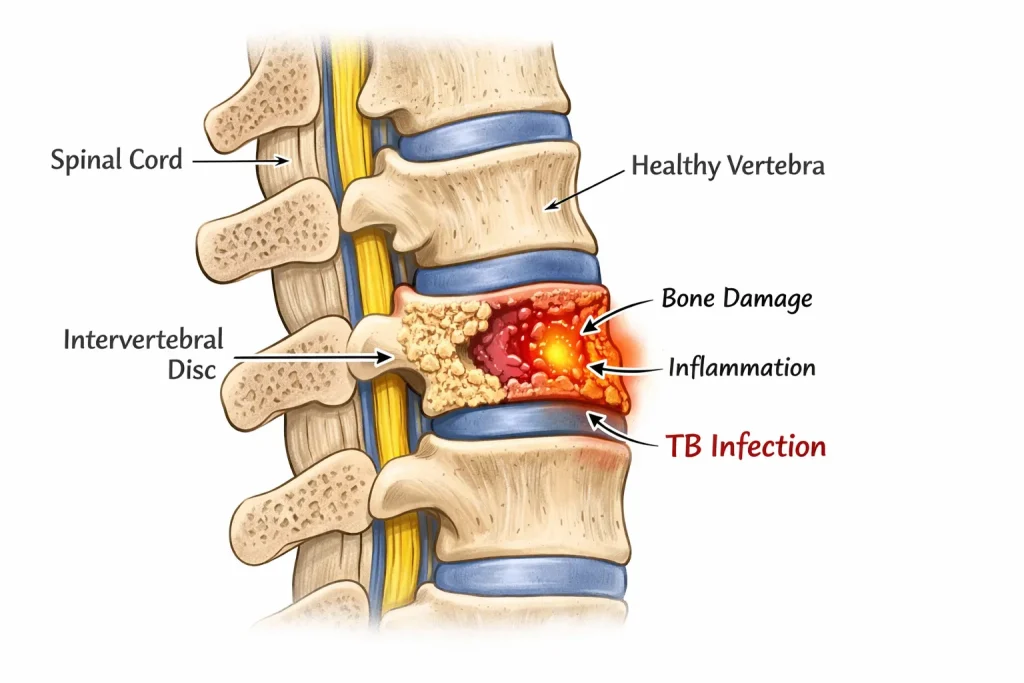
Spinal Tuberculosis (TB Spine), also known as Koch’s Spine or Pott’s Spine, is a form of tuberculosis that affects the bones and joints of the spine. It occurs when tuberculosis bacteria spread from another part of the body, usually the lungs, to the vertebrae through the bloodstream.
TB Spine is one of the most common forms of skeletal tuberculosis and remains an important cause of back pain, spinal deformity and neurological complications in developing countries.
If left untreated, spinal tuberculosis can cause destruction of vertebral bones, spinal instability, deformity (kyphosis) and compression of nerves or the spinal cord.
Early diagnosis and treatment are crucial for preventing permanent disability.
Common Symptoms
Symptoms often develop gradually over weeks or months.
Pain Symptoms
Persistent back pain
Neck pain (when the cervical spine is involved)
Pain that progressively worsens
Pain that may be present even at rest
Night pain
Constitutional Symptoms
Low-grade fever
Night sweats
Loss of appetite
Unexplained weight loss
Fatigue
Spine-Related Symptoms
Localized spinal tenderness
Muscle spasm
Difficulty walking
Progressive spinal deformity
Development of a hump (Kyphosis)
Neurological Symptoms
If nerve or spinal cord compression develops:
Tingling or numbness
Weakness in the legs
Difficulty walking
Gait imbalance
Bladder or bowel dysfunction
Causes & Risk Factors
Spinal tuberculosis is caused by infection with Mycobacterium tuberculosis.
The infection usually reaches the spine through the bloodstream from another site in the body.
Risk Factors
Previous tuberculosis infection
Close contact with TB patients
Weakened immune system
Diabetes mellitus
Malnutrition
HIV infection
Chronic kidney disease
Long-term immunosuppressive therapy
TB Spine can occasionally occur even in individuals without active lung disease.
When Should You Seek Medical Advice?
Medical evaluation is recommended if:
Back pain persists for several weeks
Pain progressively worsens
Fever accompanies back pain
Unexplained weight loss occurs
Night sweats develop
Walking becomes difficult
Spinal deformity develops
Seek Immediate Medical Attention If:
Weakness develops in the legs
Difficulty walking occurs
Bladder or bowel symptoms develop
Progressive neurological symptoms appear
These may indicate spinal cord compression requiring urgent treatment.
How Is It Diagnosed?
Clinical Examination
Your doctor will assess:
Spinal tenderness
Neurological status
Presence of deformity
Signs of systemic infection
X-Ray
May demonstrate:
Vertebral destruction
Disc space narrowing
Spinal deformity
Collapse of vertebral bodies
However, early disease may not always be visible on X-rays.
MRI
MRI is the most important imaging investigation.
It helps identify:
Vertebral infection
Abscess formation
Nerve compression
Spinal cord involvement
Extent of disease
CT Scan
Useful for evaluating bone destruction and planning biopsy procedures.
Blood Tests
May include:
ESR
CRP
Complete blood count
Tuberculosis-related investigations
Biopsy
A biopsy may be performed to confirm the diagnosis and identify the causative organism.
Tests on biopsy samples may include:
Histopathology
TB PCR / GeneXpert
Culture studies
Treatment Options
Non-Surgical Treatment
The cornerstone of treatment is Anti-Tubercular Therapy (ATT).
Treatment typically includes:
Anti-tubercular medications
Nutritional support
Physiotherapy
Activity modification
Regular clinical and radiological monitoring
Most patients respond well when diagnosed early and treated appropriately.
Surgical Treatment
Surgery may be required when:
Significant spinal cord compression is present
Progressive neurological deficits develop
Severe spinal instability occurs
Significant deformity develops
Large abscesses are present
Diagnosis remains uncertain
Common surgical procedures include:
Decompression Surgery
Abscess Drainage
Spinal Stabilization Surgery
Deformity Correction Surgery
The goal is to remove pressure on neural structures, restore stability and correct deformity when necessary.
Frequently Asked Questions
1. What is TB Spine?
TB Spine is a tuberculosis infection affecting the vertebrae and spinal structures.
2. Is TB Spine contagious?
The spinal infection itself is not directly contagious. However, patients may have associated pulmonary tuberculosis, which can be infectious.
3. Can TB Spine cause paralysis?
Yes. Untreated spinal tuberculosis may compress the spinal cord and cause weakness or paralysis.
4. Is surgery always necessary?
No. Many patients recover successfully with anti-tubercular medications alone.
5. How long does treatment take?
Treatment duration varies depending on the severity and response to therapy, often requiring several months of medication.
6. Can TB Spine cause a spinal deformity?
Yes. Vertebral destruction may lead to kyphosis and spinal deformity.
7. Is MRI necessary?
MRI is extremely useful because it helps assess the extent of infection and detect spinal cord compression.
8. What is a spinal abscess?
An abscess is a collection of infected material that may form around the spine and occasionally require drainage.
9. Can TB Spine recur?
Recurrence is uncommon when treatment is completed appropriately, but regular follow-up is important.
10. When should I suspect TB Spine?
Persistent back pain associated with fever, weight loss, night sweats or neurological symptoms should raise suspicion.
Related Conditions
Spinal Infection
Spinal Tumor
Spinal Fracture
Kyphosis
Myelopathy
Osteoporosis
When Should You Consult a Spine Specialist?
If you have persistent back pain, unexplained weight loss, fever, night sweats, spinal deformity or neurological symptoms, early evaluation is strongly recommended.
Prompt diagnosis and treatment can prevent spinal deformity, neurological complications and long-term disability.
Need Expert Advice?
Book a consultation with Dr. Siddharth Katkade or upload your MRI, CT scan or reports for review through our Patient Resource Centre.
Need Clinical Evaluation?
Consult with Dr. Siddharth Katkade (MBBS, MS, DNB, FASSI Germany/UK) for accurate diagnosis and personalized spine treatment.